%20scale(.8)'%3e%3cpath%20d='M116.770%2049.147A48%2048%200%201%200%20116.770%20110.853'%20fill='none'%20stroke='%2316263D'%20stroke-width='27.5'%20stroke-linecap='round'/%3e%3cpath%20d='M138.5%2080%20A10.5%2010.5%200%201%200%20117.5%2080%20A10.5%2010.5%200%201%200%20138.5%2080%20Z'%20fill='%23F06D5E'/%3e%3c/g%3e%3cg%20fill='%233D8B83'%20stroke='%233D8B83'%20stroke-linecap='round'%20stroke-linejoin='round'%3e%3cpath%20d='M445.5%20132%20A7.5%207.5%200%201%200%20430.5%20132%20A7.5%207.5%200%201%200%20445.5%20132%20Z'%20stroke='none'/%3e%3cpath%20d='M511.5%20110A25.5%2025.5%200%201%201%20486%2084.5A25.5%2025.5%200%200%201%20511.5%20110V135.5'%20fill='none'%20stroke-width='14'/%3e%3cpath%20d='M552%2091V135.5'%20fill='none'%20stroke-width='14'/%3e%3cpath%20d='M559.5%2068%20A7.5%207.5%200%201%200%20544.5%2068%20A7.5%207.5%200%201%200%20559.5%2068%20Z'%20stroke='none'/%3e%3c/g%3e%3c/svg%3e)
16. IROA Token Economy
The priority of the token economy is sustainable real-world service, not token price. The token supports Node deployment and operation, verified participation, and research and development. Node operators rely primarily on service fees in KRW or regulated payment methods; tokens are performance rewards. Users do not need tokens for booking, mobility, ordering, check-ins, or other essential functions.
16.1 Supply principles and token roles
- Maximum supply is fixed at 10,000,000,000 IROA, with no additional issuance.
- Nodes earn performance rewards after verified completion and compliance with availability, security, deletion, and accessibility requirements.
- Users, helpers, evaluators, institutions, hospitals, stores, and local access points share one ecosystem-participation pool.
- Research allocation funds accessibility AI, secure execution, robot safety, privacy technology, and field validation.
- There is no promise of fixed price, fixed return, principal protection, repurchase, exchange listing, or appreciation.
- Safety, privacy, cancellation rights, and essential access cannot be limited by token holdings or voting power.
16.2 Token allocation
| Allocation | Share | Amount | Primary use |
|---|---|---|---|
| Node deployment and operation rewards | 25% | 2,500,000,000 | Equipment, verified work, availability, security, and quality |
| Ecosystem participation rewards | 23% | 2,300,000,000 | Users, helpers, evaluators, institutions, hospitals, stores, and local access points |
| Research and development | 15% | 1,500,000,000 | Accessibility AI, security, robot safety, and field research |
| Team and advisors | 15% | 1,500,000,000 | Core development and long-term operation |
| Initial investors | 10% | 1,000,000,000 | Initial product and server foundation |
| Foundation and operating reserve | 7% | 700,000,000 | Audit, legal, security incident, and contingency operations |
| Initial liquidity | 5% | 500,000,000 | Initial circulation and market infrastructure |
| Total | 100% | 10,000,000,000 |
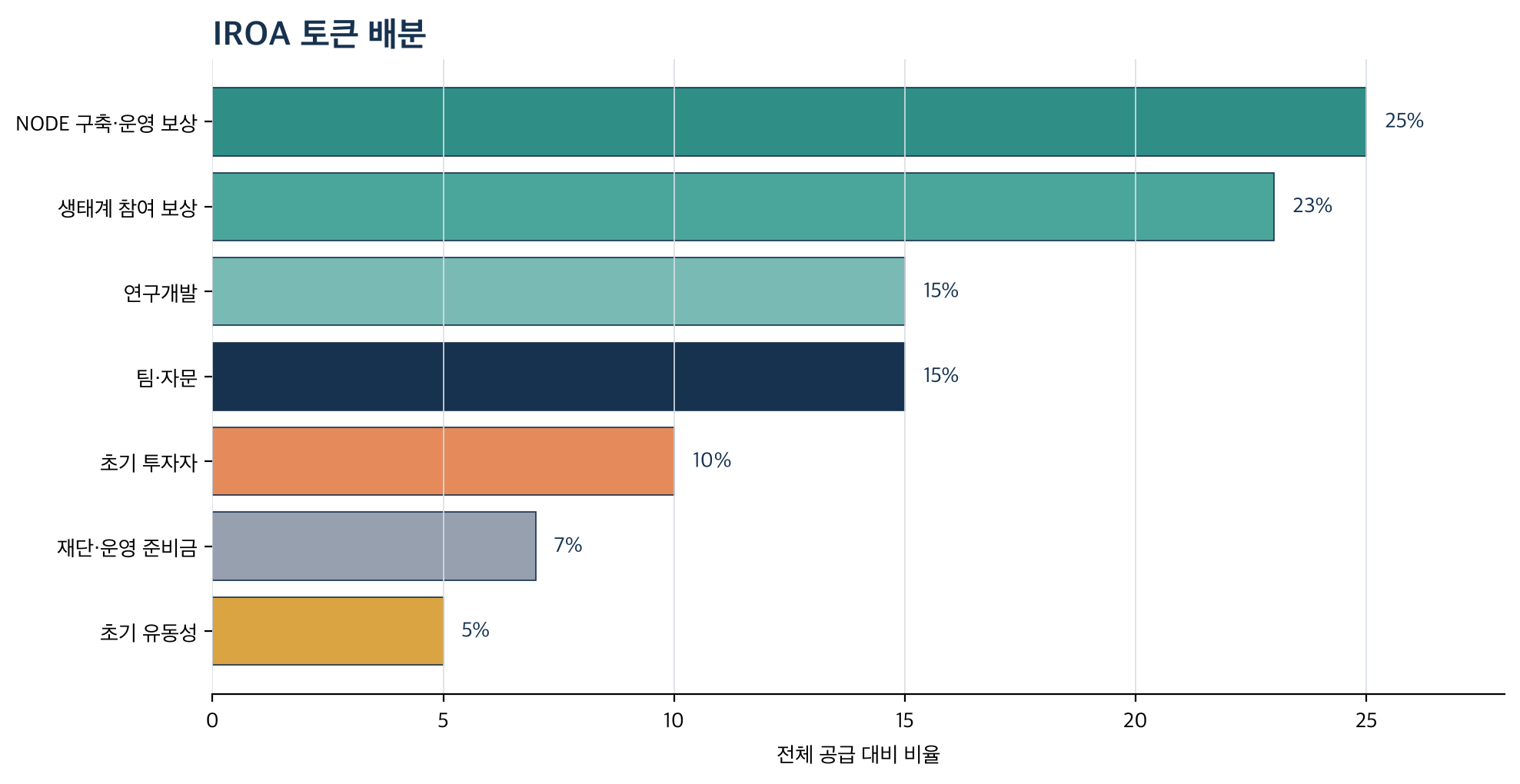
Node, ecosystem, and R&D receive 63%. Ecosystem participation uses one managed pool rather than many small participant-specific pools. Payment basis and use by participant category are disclosed quarterly.
16.3 Initial circulation and vesting
| Category | Circulation and vesting principle |
|---|---|
| Initial circulation | 2% of maximum supply |
| Remaining initial liquidity | Linear release over 36 months beginning in month 1 |
| Initial investors | 18-month lock, then linear release over 42 months |
| Team and advisors | 24-month lock, then linear release over 72 months |
| Foundation and operating reserve | 12-month lock, then linear release over 84 months |
| Node rewards | Staged emissions over 12 years |
| Ecosystem and R&D | Each deployed progressively over 10 years |
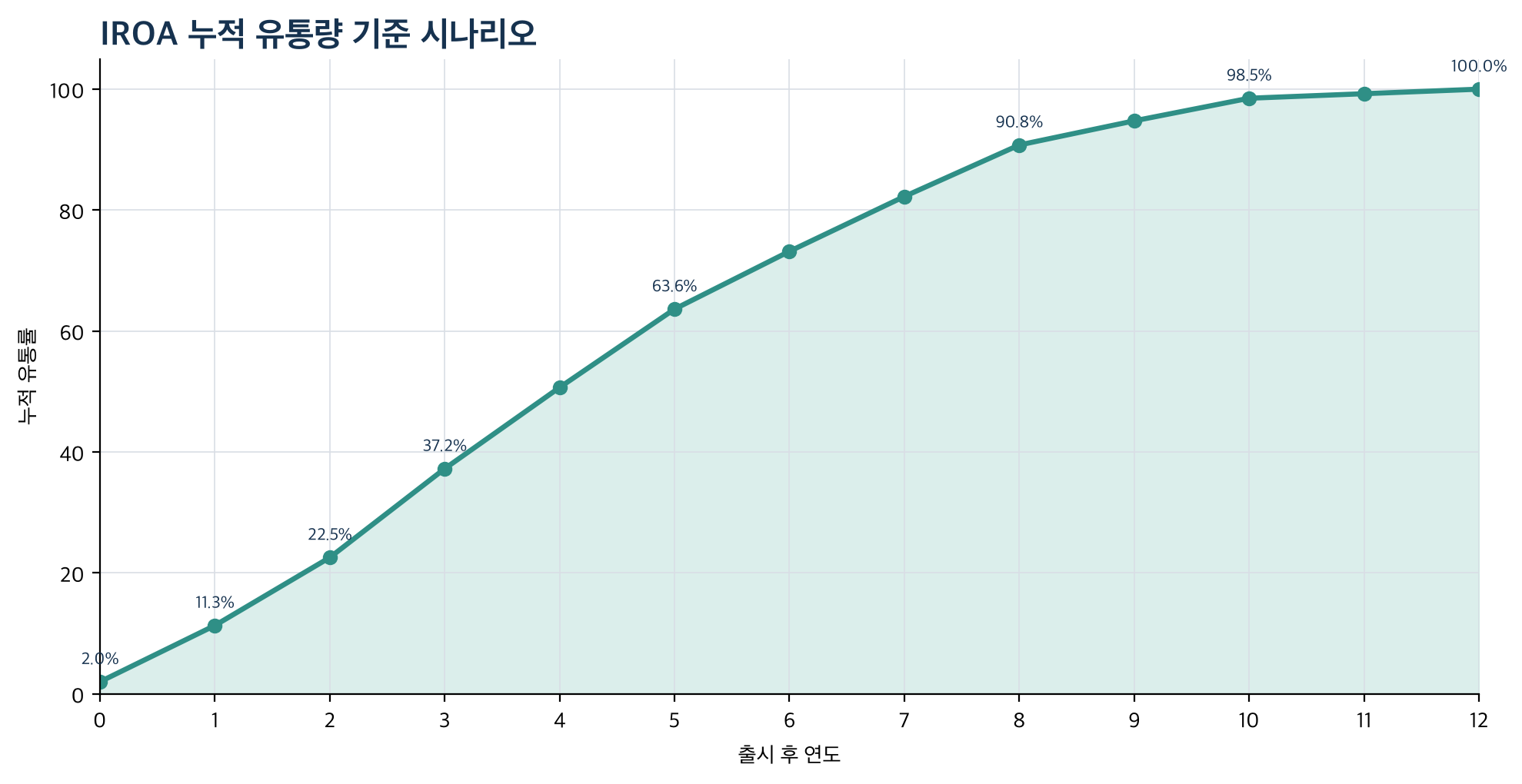
Baseline cumulative circulation is 2.0% at launch, 11.3% at year 1, 63.6% at year 5, and 98.5% at year 10. Team and investor allocations do not circulate at launch. Their maximum combined monthly unlock is spread to remain at or below 1.98% of the previous month’s cumulative circulating supply.
16.4 Node reward model
Node token reward
= verified request completion
+ availability and response
+ accessibility and quality
+ security proof and deletion compliance
- failure, duplication, and delay penalties
- fake-work, security, and privacy penalties
Registering a Node or leaving equipment on does not create fixed returns. Result Receipts, cancellation and disputes, disability-specific quality, security state, and real service use are evaluated together. Fake requests and inflated Node counts can cause reward holds, suspension, and clawback.
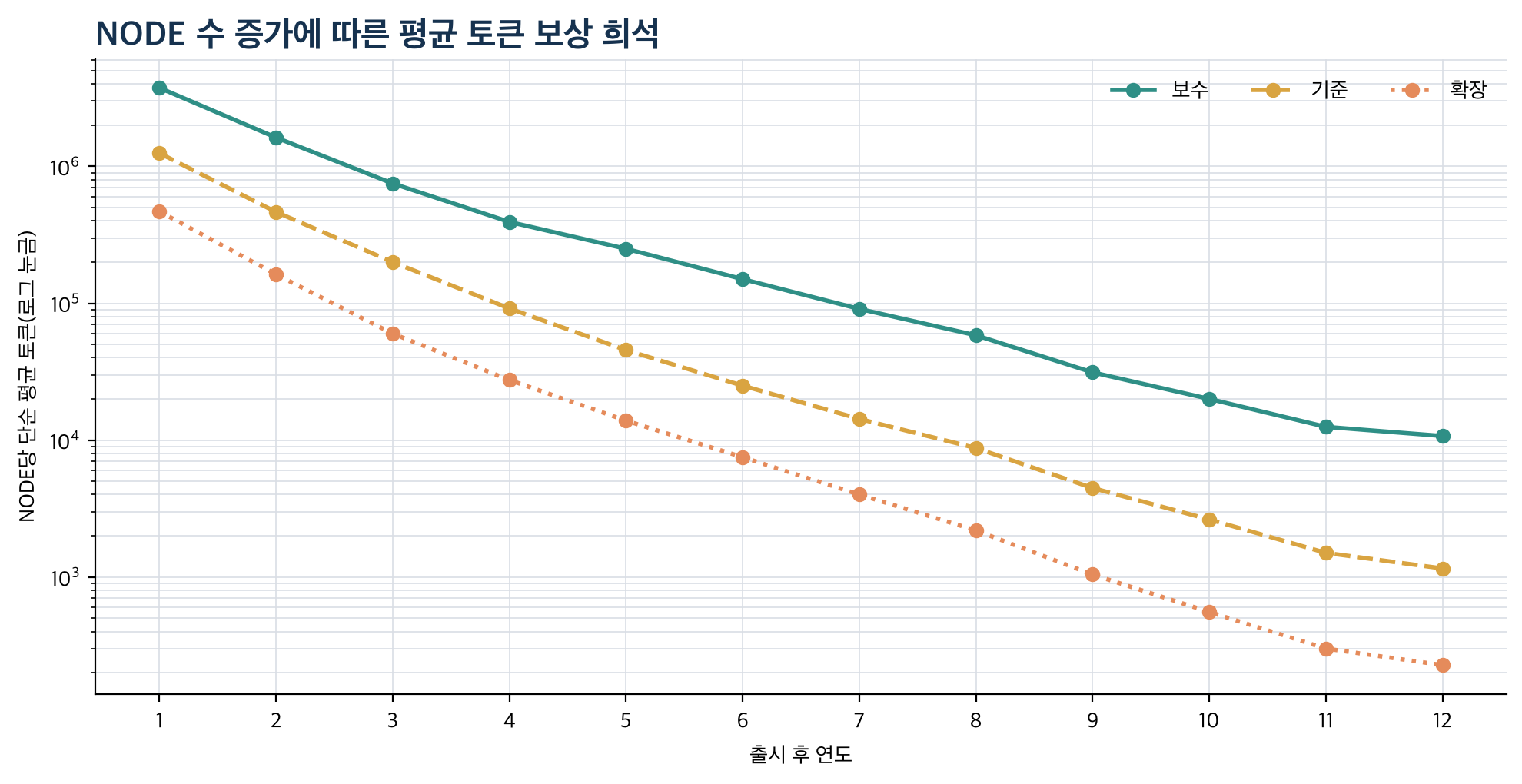
In the 12-year stress test, the simple average token amount per Node declines sharply as the fixed pool is shared across more Nodes. In the baseline scenario, the year-12 average is approximately 1/1,083 of the year-1 average. Token emissions alone therefore cannot guarantee server, electricity, connectivity, or security-staff cost. If request fees and institutional contracts do not grow, new Node expansion slows and reward rates are recalculated.
16.5 Ecosystem and R&D execution
One ecosystem pool covers users, helpers, accessibility evaluators, institutions, and local access points. Rewards depend on verified completion, accessibility improvement, safe handoff, field operation, and error discovery—not personal-data volume or time spent. Qualified professional help is restricted to verified professionals or institutions.
R&D priorities are disability-specific accessibility and plain language; Node isolation, attestation, minimization, and deletion proof; recovery, duplicate prevention, and outcome verification; on-device wearable, companion, and robot safety; standards-based hospital, welfare, and public integration; independent security audit, privacy impact assessment, and co-evaluation with affected users.
16.6 Financial and governance controls
Team, investor, and foundation wallets, schedules, and execution records are disclosed. Foundation and R&D budgets use multisignature control, annual budgets, staged payment, and quarterly disclosure. Conflicted decision-makers recuse. Smart contracts and reward formulas receive independent security audit. Securities, virtual-asset provider, tax, accounting, user-protection, and privacy questions receive separate review before issuance or circulation. Features lacking legal, security, and accounting clearance are not deployed publicly.
16.7 Simulation validation results
| Validation | Criterion | Result | Decision |
|---|---|---|---|
| Allocation total | 100% | 100% | Pass |
| Initial circulation | 5% or less | 2.0% | Pass |
| Team and investor initial circulation | 0% | 0.0% | Pass |
| Maximum monthly team and investor unlock impact | 2% or less of prior circulation | 1.98% | Pass |
| Node reward period | 10 years or more | 12 years | Pass |
| Node, ecosystem, and R&D share | 60% or more | 63% | Pass |
| Fixed Node return | Prohibited | Service fees plus performance rewards | Pass |
This baseline validates token quantities and unlock structure. It does not predict price, return, listing, exchange rate, or Node profitability. During operation, actual request volume, service revenue, Node cost, reward concentration, sell pressure, and reserve depletion are recalculated quarterly.