%20scale(.8)'%3e%3cpath%20d='M116.770%2049.147A48%2048%200%201%200%20116.770%20110.853'%20fill='none'%20stroke='%2316263D'%20stroke-width='27.5'%20stroke-linecap='round'/%3e%3cpath%20d='M138.5%2080%20A10.5%2010.5%200%201%200%20117.5%2080%20A10.5%2010.5%200%201%200%20138.5%2080%20Z'%20fill='%23F06D5E'/%3e%3c/g%3e%3cg%20fill='%233D8B83'%20stroke='%233D8B83'%20stroke-linecap='round'%20stroke-linejoin='round'%3e%3cpath%20d='M445.5%20132%20A7.5%207.5%200%201%200%20430.5%20132%20A7.5%207.5%200%201%200%20445.5%20132%20Z'%20stroke='none'/%3e%3cpath%20d='M511.5%20110A25.5%2025.5%200%201%201%20486%2084.5A25.5%2025.5%200%200%201%20511.5%20110V135.5'%20fill='none'%20stroke-width='14'/%3e%3cpath%20d='M552%2091V135.5'%20fill='none'%20stroke-width='14'/%3e%3cpath%20d='M559.5%2068%20A7.5%207.5%200%201%200%20544.5%2068%20A7.5%207.5%200%201%200%20559.5%2068%20Z'%20stroke='none'/%3e%3c/g%3e%3c/svg%3e)
13. Hospital, Health, and Wearable Integration
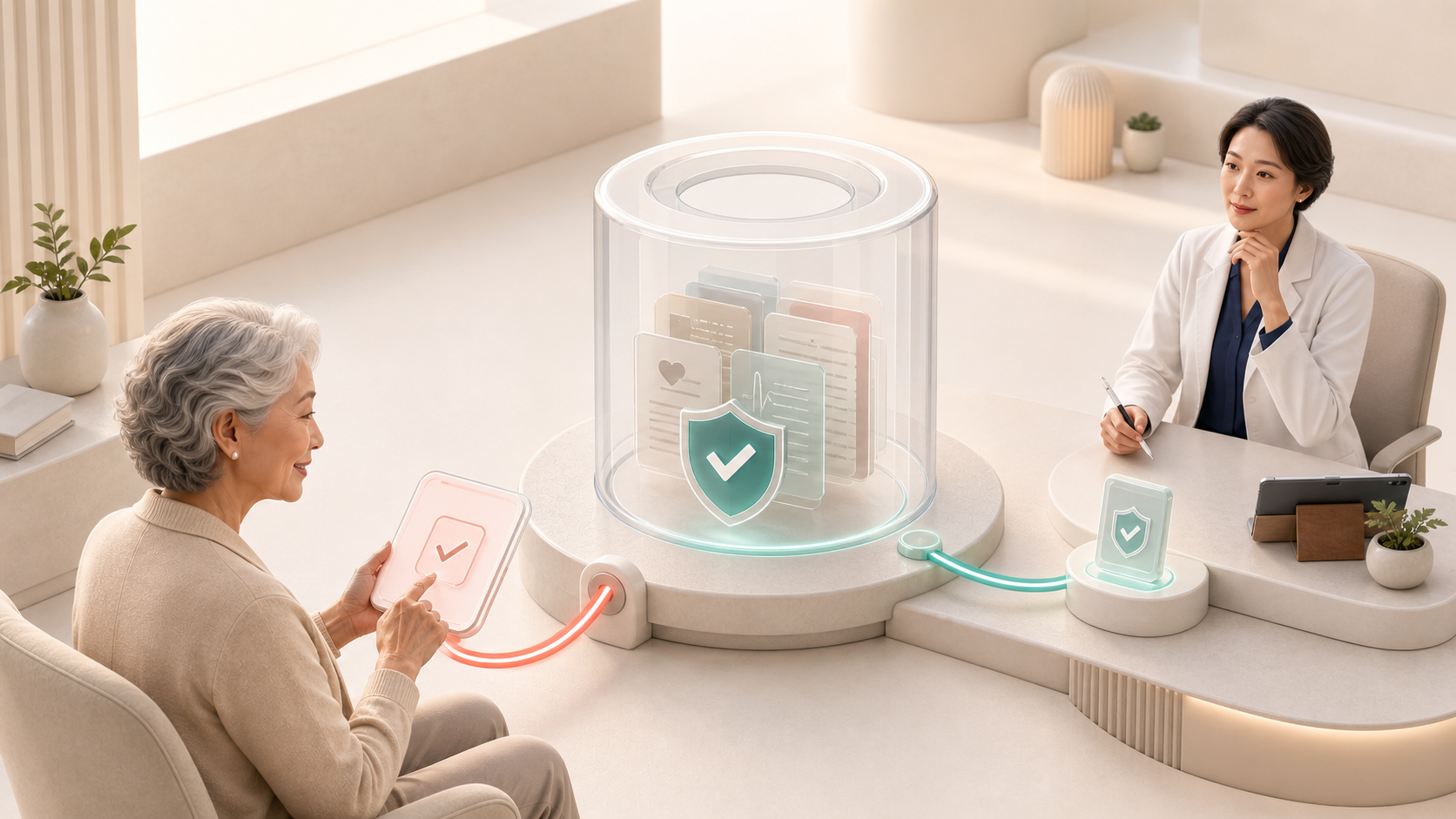
13.1 Integration stages
- information and visit preparation;
- booking, change, and cancellation through official routes;
- mobility, check-in, questionnaire preparation, and helper scheduling;
- field-level consent for personal health information; and
- standards-based institutional integration after contract and security review.
13.2 MyHealthWay and KR Core
IROA may help a user understand and select information from national or institutional health-data services. Standards such as HL7 FHIR and KR Core do not themselves create access authority. Contract, legal basis, security review, consent, and clinical workflow are also required.
13.3 Medical boundary
IROA may assist with booking, visit preparation, plain-language explanation of user-held material, questions for clinicians, reminders, chosen daily summaries, and contact after an unusual signal. It must not independently diagnose disease, change prescriptions, decide emergencies alone, impersonate clinicians, transmit health data secretly, or expose sensitive data for insurance or employment.
13.4 Shared value for hospitals
Potential value includes fewer repetitive booking calls, better visit preparation, advance accessibility needs, plain-language intake, coordinated mobility and support, and teach-back assistance. Initial work begins around booking and access rather than replacing core clinical systems.