%20scale(.8)'%3e%3cpath%20d='M116.770%2049.147A48%2048%200%201%200%20116.770%20110.853'%20fill='none'%20stroke='%2316263D'%20stroke-width='27.5'%20stroke-linecap='round'/%3e%3cpath%20d='M138.5%2080%20A10.5%2010.5%200%201%200%20117.5%2080%20A10.5%2010.5%200%201%200%20138.5%2080%20Z'%20fill='%23F06D5E'/%3e%3c/g%3e%3cg%20fill='%233D8B83'%20stroke='%233D8B83'%20stroke-linecap='round'%20stroke-linejoin='round'%3e%3cpath%20d='M445.5%20132%20A7.5%207.5%200%201%200%20430.5%20132%20A7.5%207.5%200%201%200%20445.5%20132%20Z'%20stroke='none'/%3e%3cpath%20d='M511.5%20110A25.5%2025.5%200%201%201%20486%2084.5A25.5%2025.5%200%200%201%20511.5%20110V135.5'%20fill='none'%20stroke-width='14'/%3e%3cpath%20d='M552%2091V135.5'%20fill='none'%20stroke-width='14'/%3e%3cpath%20d='M559.5%2068%20A7.5%207.5%200%201%200%20544.5%2068%20A7.5%207.5%200%201%200%20559.5%2068%20Z'%20stroke='none'/%3e%3c/g%3e%3c/svg%3e)
9. AI Kiosk: From Guidance to On-site Completion
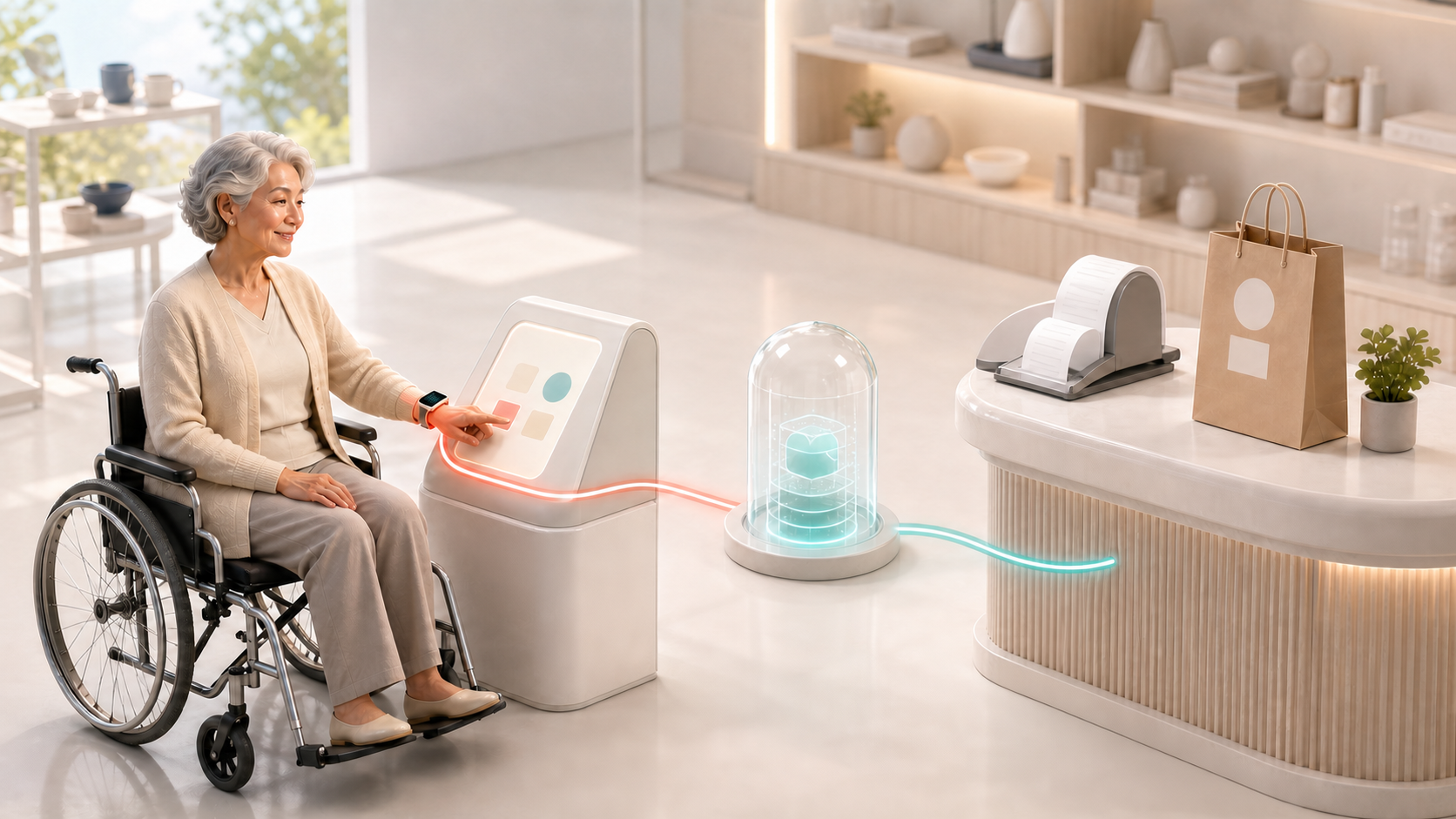
9.1 Execution-oriented kiosk
The kiosk identifies a goal, applies temporary accessibility settings, narrows and explains options, obtains confirmation, invokes regulated payment approval, verifies the receipt or booking, and deletes the session. Staff remain available for exceptions and user choice.
9.2 Adaptation by disability and preference
The flow may change text density, contrast, speech rate, captions, vibration, switch input, touch target, choice count, plain-language confirmation, and time limits. It adapts to actual settings rather than inferring ability from diagnosis alone.
9.3 Why the kiosk can be a Node
A kiosk can serve as an N2 approved access point when identity, device state, software image, data deletion, staff handoff, and output evidence meet published requirements. It receives only per-session authority.
9.4 Reducing store burden
IROA may offer a lightweight software layer for existing hardware, a managed subscription including device and support, or a regional deployment shared by institutions. Store benefits and reward eligibility depend on measured accessibility, uptime, safe help, and verified requests—not installed device count.